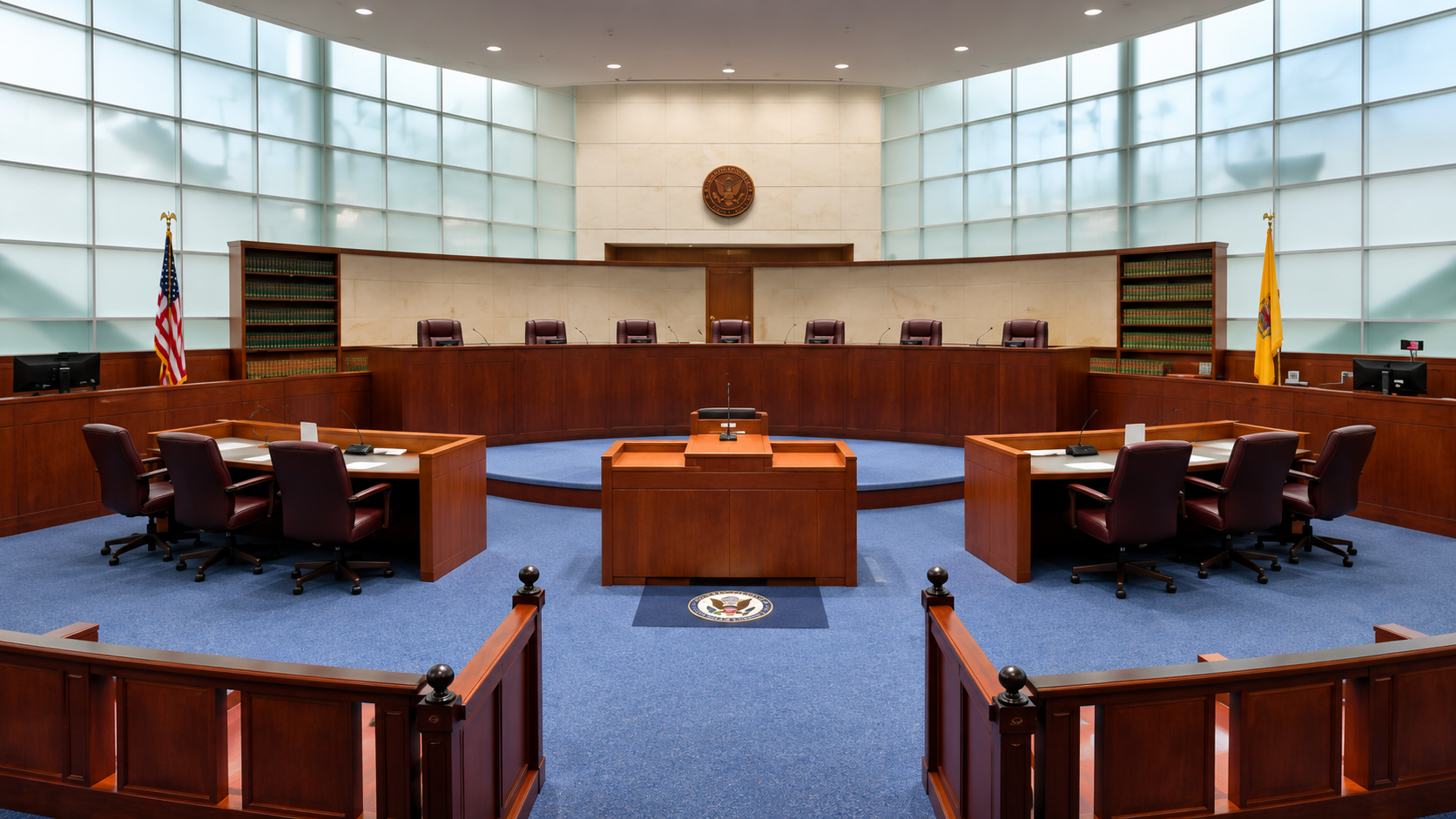
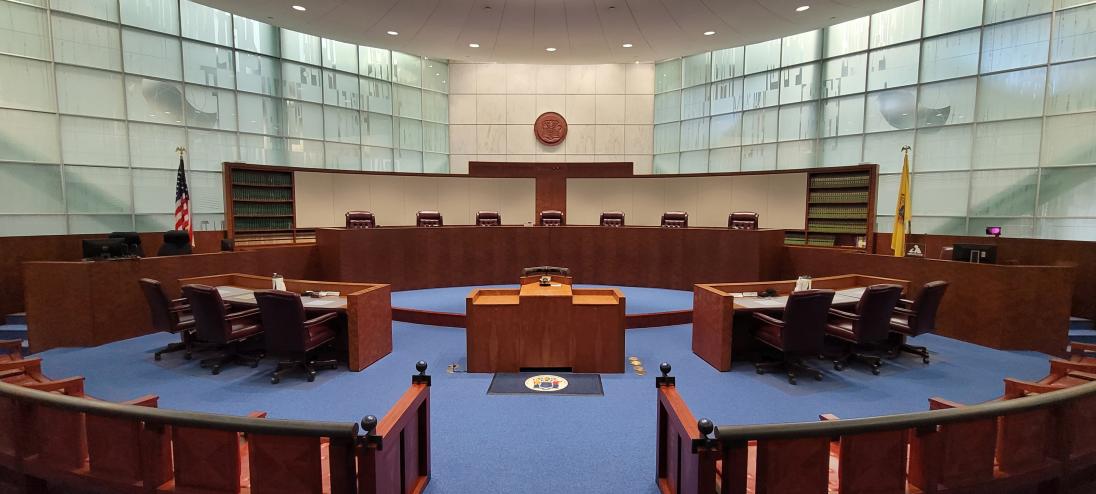
On October 14, 2026, the Third Circuit, sitting en banc for only the second time this year, heard Laureano v. Attorney General, No. 24-2433. The original opinion in Laureano was issued by a split three-judge panel on May 29, 2026, but was later vacated by the Circuit when it granted the United States Attorney General’s petition for a rehearing en banc. Such petitions, though rarely successful, can afford litigants one more bite at the apple without having to proceed via a standard petition for rehearing or a writ of certiorari.
In his dissent to the original decision, Judge Matey commented that he would prefer to “fix the mistakes now without the cost of [an] en banc” rehearing, perhaps anticipating the Circuit’s ultimate decision to vacate the opinion. That prescient comment begs the question – how does the Third Circuit decide to hear matters en banc? Moreover, what should litigants interested in filing such a petition prioritize when drafting? This article addresses both questions.
History of the Rehearing En Banc
Appellate rehearing of a matter en banc was not always an option. The concept of a rehearing en banc originated in the Third Circuit. In Commissioner v. Textile Mills Securities Corporation, the Third Circuit was the first Court of Appeals to sit en banc, pioneering the notion that sometimes many heads are greater than three. 117 F.2d 62 (3d Cir. 1940). Acknowledging that the authority to sit en banc had “been questioned in the Ninth Circuit,” the Third Circuit sat as a five-judge panel (encompassing all active Third Circuit judges at the time) and justified that choice through its reading of the Judicial Code of 1911. That reading, and the statutory history behind it, explain how a court of three judges came to hear matters as a full bench.
The Judiciary Act of 1891 created various “circuit courts of appeals,” each composed of two circuit judges and one district judge. It was not until the Judicial Code of 1911 that trial jurisdiction was formally transferred to the district courts. The 1911 Code nonetheless retained the composition that the courts of appeals had used since 1891, providing that there “shall be in each circuit a circuit court of appeals, which shall consist of three judges.”
The 1911 Code’s language regarding composition was not called into question for twenty-nine years. However, in 1940, the Third Circuit interpreted the language concerning “three judges” as specifying a necessary quorum, not a limit. The “consist of” language evidenced a floor, supported by the fact that multiple circuits at that time generally had more than three active judges to accommodate growing caseloads. The Court further reasoned that if the statute were read to cap a panel at three judges, a circuit that had more than three judges would have to exclude other equally qualified Article III judges from its most important matters, which the Court deemed “an absurd situation.” To hold otherwise, the Court noted, would be to “destroy the authority of the court.”
The decision resulted in a split with the Ninth Circuit. In 1941, the Supreme Court resolved the split in the Third Circuit’s favor, holding that a Court of Appeals can sit as a panel of all circuit judges in active service. As a result, petitioners seeking reconsideration are now entitled one more avenue – a rehearing en banc.
The Procedure
Chapter 9 of the Third Circuit’s Internal Operating Guidelines (IOP) sets forth the procedural steps for en banc consideration. IOP 9.1 instructs that “en banc consideration is required” to “overrule [] the holding in a precedential opinion of a previous panel.”
En banc hearings in the first instance are governed by IOP 9.2, which paraphrases Fed. R. App. P. 40 by providing that an “[i]nitial en banc hearing is extraordinary; it is ordered only when a majority of the active judges who are not disqualified [] determines that the case is controlled by a prior decision of the court which should be reconsidered and the case is of such immediate importance that exigent circumstances require initial consideration by the full court.”
En banc rehearings, by contrast, are governed by IOP 9.3, 9.4, and 9.5.
IOP 9.3 sets out the general standards and explains, similar to IOP 9.2, that “rehearing en banc is not favored and will not be ordered unless consideration by the full court is necessary to secure or maintain uniformity of its decisions or the proceeding involves a question of exceptional importance.”
IOP 9.4 concerns court-originated rehearings. In short, after a judge on a three-judge panel circulates his or her draft opinion, one judge, usually a dissenter, must timely vote for rehearing en banc. If a majority of judges who are not disqualified vote to consider the case after review of the circulated draft opinion, the Chief Judge will order the rehearing.
IOP 9.5 addresses petitions for en banc rehearing and cross-references the Federal Rules’ four disjunctive criteria entitling a petitioner to such a rehearing. Specifically, Fed. R. App. P. 40(b)(2) provides that “[a] petition for rehearing en banc must begin with a statement that: (A) the panel decision conflicts with a decision of the court to which the petition is addressed and the full court’s consideration is therefore necessary to secure or maintain uniformity of the court’s decision; (B) the panel decision conflicts with a decision of the United States Supreme Court; (C) the panel decision conflicts with an authoritative decision of another United States court of appeals; or (D) the proceeding involves one or more questions of exceptional importance, each concisely stated.” (cleaned up).
The Petition
A petition should be carefully crafted to ensure that at least one of the criteria of Fed. R. App. P. 40(b)(2) is satisfied. Because IOP 9.3 provides that rehearing en banc “is not favored,” an argument that the panel simply erred is unlikely to satisfy any criterion. Practitioners should note that Fed. R. App. P. 40(b)(2) requires the petition to begin a statement identifying the basis for the request. If the petition is, for example, based on an asserted conflict with another decision, the petition should identify that prior decision and explain with particularity why the two cannot be reconciled.
Perhaps the most difficult-to-satisfy criterion of Fed. R. App. P. 40(b)(2) is the exceptional importance standard. Unlike a conflict, which can be shown by comparing two decisions, importance has no fixed measure. A petitioner relying on this criterion must therefore persuade a majority of the active judges that the question warrants the full court’s attention regardless of whether the panel’s decision conflicts with precedent.
One potential benefit of pursuing a petition for rehearing en banc over a standard petition for rehearing is that the clerk transmits a copy of it “to each member of the panel [that] heard and decided the case and to the other active judges of the court.” IOP 9.5 (emphasis added). The petition therefore reaches all fourteen active judges on the Third Circuit, rather than only the three who decided the case after the initial hearing, which increases the chance of the disagreement needed for rehearing. Petitioners should therefore write with that full audience in mind.
While rehearings en banc are incredibly rare, they should not be forgotten or overlooked by practitioners as a potential tool for obtaining additional appellate review of an issue. A thoughtfully drafted petition carries the potential to breathe new life into an unfavorable panel decision.